 Places
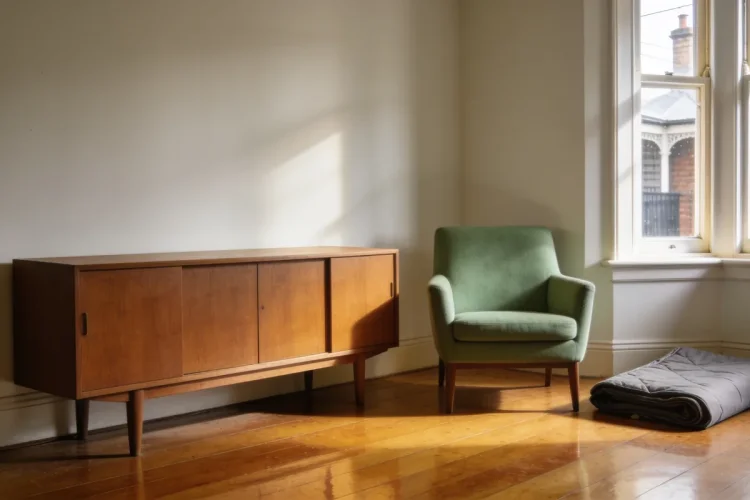
The lounge room has been empty since you moved in. Then a listing turns up: a cheap couch in good condition, two suburbs away, and in the same search a dresser described as “solid oak”. Both look right in the photos, and the photos are the problem. They can’t show you the seams of the cushions, the back of the dresser or the turn at the top of your stairs.
Second-hand furniture carries three distinct risks, and they’re worth separating because each needs a different check. The first is bed bugs, which you can bring home inside a piece and which are far harder to remove than to avoid. The second is the material: what you’re paying for may not be what the listing says, and that changes what you can repair later. The third is fit, which is the most common way a good buy turns into a wasted afternoon. A torch, five minutes and a tape measure cover all three.
Bed Bugs: The Five-Minute Check
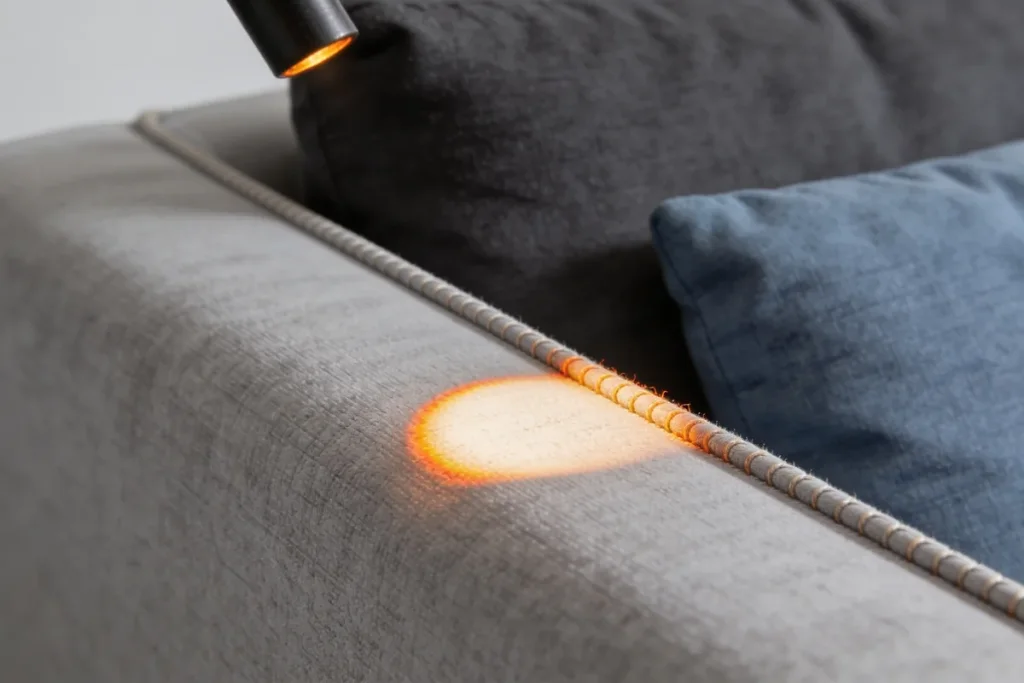
HealthyWA, the Western Australian Department of Health’s public information site, is specific about what to look for and where. Its advice for anyone bringing second-hand furniture home is to inspect it before it comes inside, and to take particular care with bedroom furniture.
The signs it lists are:
| Sign | What to note |
|---|---|
| Live bugs | Any bug in a seam, fold or join |
| Cast skins | Shed skins, left behind where bugs have been |
| Eggs | In folds, seams and cracks |
| Dark spots | Spots of excrement or blood on fabric or timber |
| Smell | A distinct “bug” smell, which can mean a heavy infestation |
Bed bugs hide in tight spaces, so look where the fabric folds or two surfaces meet. On a couch, that means the piping and seams, under every cushion, along the zips of cushion covers, the joins of the frame, and the underside, which usually means tipping it back to look under the dust cover. On timber pieces, check the joints, drawer runners, corners and any cracks. A small torch helps, because the evidence is small and dark against fabric.
Two of HealthyWA’s points deserve emphasis. First, be cautious with furniture from verge collections, where you have no history at all and the piece may have been put out for exactly this reason. Second, if you do find signs of bed bugs, the advice is to have the item treated by a licensed pest management technician before it comes into the house, and not to delay, because delay lets an infestation spread. HealthyWA also notes that bites can take up to nine days to appear, so the absence of bites in the first few days is not proof of anything.
Questions help too, though they don’t replace the look. Ask how long the seller has had the piece, which room it lived in, and whether it came from a rental, a storage unit or another sale. A clear, specific answer (“we bought it new, it’s been in the study”) is worth more than a vague one. The answer tells you how much history you’re inheriting, not whether the piece is clean, so do the inspection either way.
My own rule is simpler. If you see any of the signs in the table, or you aren’t sure what you’re looking at, don’t take the piece. No price makes up for an infestation.
Soft or Hard Furniture
The check above applies to everything, but the risk isn’t evenly spread. Put in order from more risk to less, it looks roughly like this:
- Mattresses and bed bases. Bedroom items sit right where bed bugs feed, and HealthyWA singles out bedroom furniture for inspection. A mattress also has the most seams and the least visibility inside.
- Upholstered couches, armchairs and fabric headboards. Plenty of seams, piping and hidden spaces under dust covers.
- Timber frames with fabric parts, such as dining chairs with padded seats. Check the padding and the joins.
- Hard furniture with no fabric: timber tables, bookcases, metal shelving. Fewer hiding places, and those that exist are easier to see.
That order is not a rule that hard furniture is safe. Bed bugs can shelter in the cracks and joints of a bedside table or a bed frame. It is a guide to where your five minutes should go first. Mattresses are a separate decision: many people choose to buy them new, and given the inspection difficulty, I think that’s a reasonable choice.
Solid Timber, Veneer or Particleboard
“Solid oak” in a listing is a description, not a guarantee, and the seller may genuinely not know. Three materials turn up most often, and you can usually tell them apart in a few minutes.
| Material | What it is | How to tell |
|---|---|---|
| Solid timber | The same timber all the way through | End grain on edges matches the grain on top; drawer fronts joined with timber joints; heavy for its size |
| Veneer | A thin layer of real timber glued over a core | Grain on the edge doesn’t continue from the top; a thin layer visible at a chip or worn corner; the core shows on the underside |
| Particleboard or MDF | Wood particles or fibres pressed together, often with a printed or laminate finish | Edges finished with a strip; a repeating, too-regular pattern; crumbly or uniform material where it’s chipped; unfinished panels on the back |
Look at the edges first, then pull out a drawer and look at how the front joins the sides. Then turn the piece around and check the back panel and the underside, which are usually left unfinished and show the real material.
None of this makes veneer bad. Plenty of well-made furniture is veneered, and a veneer over a stable core can resist warping better than some solid timber. What changes is repair. Solid timber can usually be sanded back and refinished more than once. Veneer can only be sanded lightly before you go through it. Particleboard swells if it gets wet and doesn’t hold screws as well once the holes are worn, which matters for the next section. Price the piece by what it is, not by the word in the listing.
Flat-Pack That Has Been Built Before
Flat-pack furniture is designed to be assembled once. It can usually be taken apart and rebuilt, but every cycle costs it something, and a piece that’s been moved in one piece has its own risks.
Before you agree to buy, check:
- The holes. Screw and dowel holes in particleboard wear and widen. Look for stripped holes, cracks around fittings, or screws that spin without biting.
- The fittings. Cam locks, dowels, shelf pins and brackets. Ask whether they’re all there, and whether the instructions are. Missing fittings are a nuisance; missing instructions make reassembly a guess.
- The back panel. Thin back panels are often nailed or slotted in and bend or split on removal.
- Water marks. Swelling at the base or edges of particleboard doesn’t go back down.
If the seller offers to dismantle it before you arrive, consider whether it will survive being rebuilt. If you plan to move it assembled, measure it as assembled. That leads to the last check.
Measure Before You Go
A surprising number of second-hand purchases fail in the hallway. The couch fits the room and not the route to it. Measure both the piece and every point it has to pass through, before you leave home.
| Measure | Where | Why it matters |
|---|---|---|
| Item width, depth and height | Ask the seller, or measure on arrival | The basic numbers; check the listing’s figures if given |
| Diagonal depth | Corner to corner of the side profile | A couch can often tilt through a doorway narrower than its height |
| Front door and every internal door | The clear opening, with the door open | Door stops and hinges reduce the usable width |
| Corridors and hallway turns | Width at the narrowest point and at each corner | Long pieces get stuck on a turn even when the corridor is wide |
| Stairs | Width, ceiling height above the stairs, and any landing turn | Overhead clearance stops tall pieces on the way up |
| Lift | Door width and internal depth and height | Some long items only fit standing on end |
Ask the seller whether the legs unscrew. Many couches and tables have legs that come off, which can make the difference at a tight door. If the numbers are close, plan for the worst-case turn rather than the best-case doorway.
Pickup
Plan the move before you pay, not after. A ute or trailer is the usual choice for larger pieces. Bring moving blankets or old doona covers to protect the furniture and the vehicle, straps or tie-downs to secure the load, and a second person. Most couches and dressers are a two-person lift, and stairs make that non-negotiable.
For upholstered items that have passed your inspection, wrapping them for the trip keeps them clean and is a sensible extra step. Take drawers out of dressers and carry them separately, which makes the piece lighter and stops the drawers sliding open.
If you agreed to buy from the photos, the pickup is also your inspection, so allow time for it. Do the torch check and the material check on the spot, before anything goes into the vehicle. Agree with the seller beforehand that you’ll look before you pay, so that walking away at the door isn’t a surprise to either of you. Pay once the piece has passed and is ready to load.
Torch, Tape Measure, Then Cash
The order of checks matters. Inspect for bed bugs first, using HealthyWA’s signs: live bugs, cast skins, eggs, dark spots and a distinct smell, in the seams, joins and underside. If you see any of them, or aren’t sure, walk away. Then identify the material from the edges, drawer joints and back panel, and price it on what it is. Finally, measure the piece and every door, corridor, stair and lift on the way to its room.
Torch, tape measure, and only then the money.
Sources: HealthyWA, Bed bugs (https://www.healthywa.wa.gov.au/Articles/A_E/Bed-bugs)


