 Places
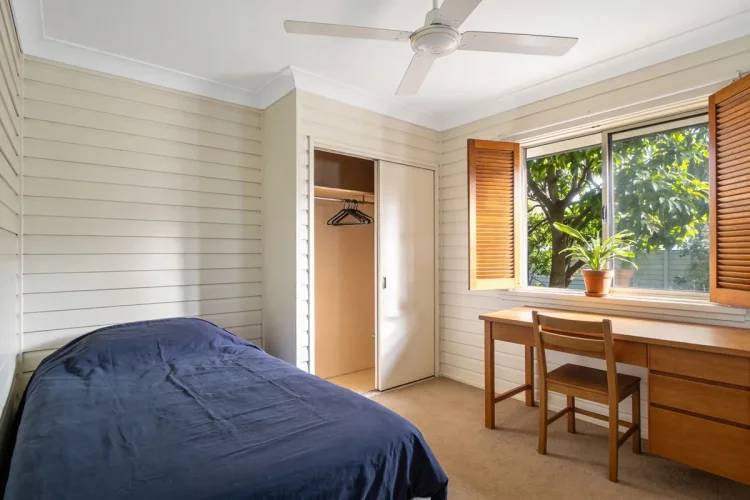
You’ve found it. A bright room in a share house, close to the station, with flatmates who seem easy to live with. The inspection goes well. You can already see where your desk would go. Then, as you’re standing at the front door, the person who lives there says they’d love to have you, and could you bring the bond in cash today? Someone else is keen, and they’d hate to lose you.
If your heart sinks a little at that, it’s for a good reason. Asking about money in someone else’s kitchen feels awkward, especially when you really want the room and they’ve been nothing but friendly. But the questions you ask now decide your rights for as long as you live there: whose name is on the lease, where your bond goes, and what happens when someone moves out.
This guide takes it one step at a time. First, working out which kind of arrangement you’d actually be in, because the law treats each one differently. Then where your bond should go, what paperwork to ask for, the red flags, and what to agree with the people you’re about to share a fridge with.
Before we start: this is general information, not legal advice, and the rules differ between states. I’ve used New South Wales, Victoria and Queensland as worked examples. If you live elsewhere, check your own state’s tenancy authority.
Which One Are You?

“Moving into a share house” can mean several quite different things on paper. The words used vary a little between states, but the arrangements usually fall into one of these.
Co-tenant (co-renter in Victoria). You’re named on the lease alongside the others. You have the same rights and responsibilities as everyone else on it. Consumer Affairs Victoria says co-renters are all on the agreement and are equally responsible.
Sub-tenant. Someone who is already a tenant rents part of the property to you. NSW Fair Trading describes sub-letting this way: the tenant rents part of the place to you and stays responsible to the landlord. In effect, that tenant becomes something like your landlord.
Boarder or lodger. This usually applies when you rent a room in someone’s own home. Queensland’s Residential Tenancies Authority says that if an owner is renting out a room in their own home, it’s more likely to be a boarder or lodger arrangement.
Additional occupant. In NSW, Fair Trading describes a third, informal arrangement: someone living in the home without being added to the agreement or sub-letting.
Why does this matter so much? Because it decides who you deal with when something goes wrong. A co-tenant deals with the landlord or agent. A sub-tenant usually deals with the head tenant. A boarder deals with the owner. Your bond, your notice and your repairs all depend on which of these you are.
Here’s how that can look in real life. Imagine three rooms advertised in the same week. In the first, the agent adds you to the lease and you sign alongside two other people: you’re a co-tenant. In the second, a woman who rents the whole house from an agent wants someone in her spare room, and you’d pay rent to her: you’d be a sub-tenant, and she’d be the person you deal with. In the third, a retired couple who own their home are renting out the back bedroom: in Queensland, the RTA’s description suggests that’s likely a boarder or lodger arrangement. Three rooms, three quite different sets of rules.
So ask, kindly and directly: “Would I be going on the lease, or renting from you?” The answer tells you which part of the rest of this guide applies to you.
Where Your Bond Goes
This is the part I most want you to remember. In general, a rental bond isn’t meant to sit in someone’s pocket. It’s meant to be lodged with your state’s bond authority, where neither side can spend it, and released at the end in a way both sides can see.
Here’s how the three states I’ve looked at handle it.
New South Wales. Co-tenants choose a principal tenant, who manages the bond through Rental Bonds Online. For agreements signed after 21 September 2026, NSW Fair Trading says each co-tenant’s bond contribution is recorded. If you’re joining as a co-tenant, that record is one of the most useful things you can ask about.
Victoria. If a co-renter changes, Consumer Affairs Victoria says the bond must be transferred within 5 days of the new person moving in. The Residential Tenancies Bond Authority, the RTBA, releases the bond only when all the renters have completed the claim. So if you’re replacing someone who’s leaving, ask how and when the transfer will be done.
Queensland. The RTA says all rental bonds must be lodged with it within 10 days. That includes money taken as security in boarder and lodger arrangements, so being a boarder doesn’t mean your bond can just be held in a drawer.
You’ll often hear that in share houses it’s normal for one or two people to be on the lease with the bond in their name, and everyone else hands over their share. Sometimes that’s how a house has run for years, and it may be done with good intentions. But “it’s a trust thing” leaves you with no record. Where you can, ask for your share to go to the bond authority in a way that shows your contribution. If you’re asked to pay someone half a bond in cash, with no lodgement, pause.
And if you’ve already handed it over? Please don’t panic. Plenty of people have done exactly the same thing, usually because everyone in the house said it was normal. Ask now, politely, for a written receipt with the amount, the date and the name of the person who took it. Ask whether and when it will be lodged. If you’re unsure where things stand, your state’s bond authority or tenancy authority is the right place to ask about your situation. It’s much easier to sort this out in your first month than on the day you move out.
The Lease and Permission
If you’re not going straight onto the lease as a co-tenant, the person renting to you usually needs the landlord’s agreement.
In NSW, Fair Trading says a tenant needs the landlord’s written permission to sub-let or to transfer the tenancy. It also says a landlord can’t unreasonably refuse a request to sub-let part of the property or to add co-tenants. So permission is needed, but it can’t just be refused on a whim.
In Victoria, Consumer Affairs Victoria says sub-letting needs the rental provider’s permission.
In Queensland, the RTA says a head tenant who sub-lets takes on landlord-like duties. That includes giving you a written agreement, an entry condition report and a receipt for your bond.
What does this mean for you on the day? It means it’s completely reasonable to ask two things. Can I see the lease, or at least the part that shows who the tenants are? And if you’re renting the room to me rather than adding me, can I see the landlord’s consent? A person with nothing to hide will usually understand. If they say the landlord “doesn’t need to know”, think carefully. If the landlord didn’t agree, your place in that house may be much less secure than it looks.
Paperwork Before You Pay
I grew up helping on my family’s market stall, and one thing my mum always said was that a receipt is a kindness to both sides. It stops arguments before they start. The same is true here.
Before you hand over any money, try to have:
- A written agreement. Either your name on the lease, a written sub-tenancy agreement, or a written boarder or lodger agreement, depending on your arrangement.
- A condition report. A record of the room and shared spaces as they are when you move in, ideally with dated photos. Take your own photos too.
- Proof of the bond. Either a lodgement record from the bond authority, or at the very least a written receipt showing the amount, the date and who received it.
- Rent receipts or records. Pay rent in a way that leaves a record, like a bank transfer with a clear description, rather than cash with nothing written down.
- A repairs contact. Who do you tell when the hot water stops? The agent, the landlord or the head tenant? Ask now, not in the middle of a cold shower.
None of this is being difficult. It’s just being clear.
Red Flags
Most people renting out a room in a share house are perfectly decent. But a few patterns are worth slowing down for:
- Bond in cash, no receipt. Especially if you’re told it won’t be lodged.
- A “landlord” who won’t lodge the bond. People asking about this online usually hear the same thing: it’s not the norm, and it’s a red flag.
- No proper inspection. Being asked to commit without seeing the room in person, or seeing a different room from the one advertised.
- Pressure. “Someone else is coming at six, so I need it now.” A real offer will usually wait an hour while you think.
- A deposit before you’ve seen the room. Paying to “hold” a room you’ve only seen in photos is one of the oldest tricks in renting. If the room doesn’t exist, the money is gone.
- No way to check who you’re dealing with. If you can’t confirm they live there or hold the lease, be careful.
If something feels off, it’s alright to say, “I’d like to sleep on it.” The right room usually survives one night.
The Flatmate Agreement
The lease covers you and the landlord. It doesn’t cover who empties the bins. That’s what a flatmate agreement is for: a simple written note, agreed by everyone in the house, about how you’ll live together.
It doesn’t need to be formal. A shared document or a page everyone signs is fine. What matters is that it’s written down while everyone is still getting along. Things worth including:
- Rent. How much each person pays, when, and to whom, and whether bigger rooms pay more.
- Bills. Electricity, gas, internet and water: whose name each one is in, how the cost is split, and when people pay their share.
- Shared costs. Cleaning products, toilet paper, the basics. A kitty or a rotating turn works for many houses.
- Chores. A simple roster for kitchen, bathroom and bins.
- Guests. How often partners can stay over, and how much notice to give for visitors staying a few nights.
- Quiet hours and shared spaces. Especially if someone works shifts or studies from home.
- Notice. How much warning someone gives before moving out, and whether they help find a replacement.
- The bond. How each person’s bond share comes back to them when they leave, and when.
It might feel a little formal to bring up at the start. In my experience, it’s much easier to agree on these things over a cup of tea in your first week than in the middle of a disagreement in your sixth month. Add one more line while you’re at it: what happens if someone can’t pay their share of a bill on time. Agreeing on that while nobody is short of money keeps it from turning into a fight later.
Moving Out
When it’s your turn to go, give the notice your agreement requires and, if you can, help find someone to take your room. Then ask about your bond.
In NSW, Fair Trading says the remaining tenants repay a departing co-tenant’s share of the bond within 14 days of the request. If that doesn’t happen, an application can be made to the Tribunal within 6 months. In Victoria, remember the RTBA needs all renters to complete the claim before it releases the bond, so keep in touch with your old flatmates. Everywhere else, check your state’s tenancy authority.
Before you hand back your key, leave your room the way you found it, using your move-in condition report as the guide, and take dated photos of the room and any shared areas you looked after. Settle your share of the last bills, in writing, so nobody is chasing anyone later. Then leave your new address with your old flatmates. A friendly goodbye makes the bond conversation much easier.
Name, Bond, Paper
You don’t need to know the law by heart to rent a room safely. You need three things.
Your name, or at least clarity about your arrangement: co-tenant, sub-tenant or boarder. Your bond, lodged with the state authority where possible, with a record you can check, and never handed over in cash for keeps. And paper: a written agreement, a condition report, receipts and a flatmate agreement.
Ask kindly, ask early, and don’t let anyone rush you at the front door. A good share house will still be there after you’ve asked your questions.
Sources: NSW Government, Sharing a residential rental property (https://www.nsw.gov.au/housing-and-construction/rules/sharing-a-residential-rental-property); Consumer Affairs Victoria, Co-renting (https://www.consumer.vic.gov.au/housing/renting/starting-and-changing-rental-agreements/co-renting-renting-with-other-people); Residential Tenancies Authority, The ABCs of renting a room, 2023 (https://rta.qld.gov.au/news/2023/07/27/the-abcs-of-renting-a-room)


