 Places
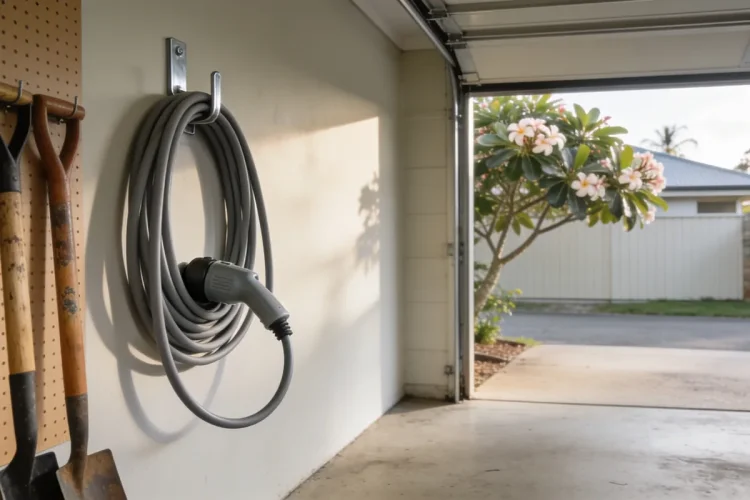
Used electric cars are turning up in the listings at prices that put them alongside petrol cars of a similar age, and some of them look like real bargains. The paint is fine, the interior is clean and the odometer is reasonable. What the listing can’t show you is the battery, which is the most expensive part of the car and the one you can’t judge by looking at it. That gap can be closed with a few specific questions: is there a State of Health report, what does the number mean, is the battery warranty still running, and does it transfer to you? The checklist below covers those questions and the rest of the inspection, and the sections after it explain each one, using the RACQ’s guide to buying a used EV as the reference.
Used EV checks
0 of 14Ask for the battery report before you arrange a test drive.
Battery
The car
Cables
Drive and paperwork
A battery report shows health today, not how it will age.
Why the Battery Is the Purchase
With a petrol car, the engine is one major system among several, and you assess it alongside the gearbox, suspension and body. With an EV, the high-voltage battery pack accounts for a large share of the car’s value, so the buying decision rests on it to a degree that’s unusual.
Batteries lose capacity gradually as they age and are used. That is expected and, for most cars, slow. The question for a buyer isn’t whether the battery has degraded at all. It’s two narrower questions:
- How much capacity has it lost so far? That is what a State of Health report tells you.
- If something goes wrong with it, who pays? That depends on the battery warranty, and whether it still applies to you.
Everything else in a used EV inspection resembles a used petrol car inspection, with a few differences. These two questions are what make buying an EV a different exercise, so they come first.
The State of Health Report
A State of Health (SoH) reading expresses the battery’s current usable capacity as a percentage of its capacity when new. A battery at 92% SoH can hold about 92% of the energy it could when the car was new.
RACQ’s advice is to ask whether a SoH report exists for the car. Depending on the make and model, a reading may be available from:
- a dealer or the manufacturer’s service centre, which can read the battery data with its own equipment;
- an independent battery test, offered by some motoring organisations and specialist workshops;
- the car itself, as some models display battery health information in a menu or service screen.
When you have a number, RACQ offers a way to read it:
| SoH reading | RACQ’s assessment |
|---|---|
| 95-100% | Excellent |
| 90-95% | Very good |
| 85-90% | Normal for an older EV |
| Below 80% | Investigate carefully |
Two points about using this table. First, compare the reading against the car’s age and odometer. A reading in the high 80s is less of a concern on an older car with high kilometres than on a nearly new one. Second, note the date of the report. A test done last week tells you more than one done two years ago.
RACQ also makes a point that’s easy to miss: a SoH test shows the battery’s health today, not how it will perform in future. That is why the warranty matters as much as the reading.
If the seller has no report and won’t arrange one, treat that as a gap in the information you’d need to price the car, and adjust your offer or move on accordingly.
The Warranty and Whether It Is Yours
Battery warranties on EVs are typically separate from the car’s general warranty. RACQ says a typical battery warranty today is 8 years or 160,000km, whichever comes first, which is often longer than the warranty on the rest of the car. That means a used EV can be out of its general warranty while its battery is still covered.
To know whether that applies to the car in front of you, check three things:
- The first registration date. Warranty periods usually run from when the car was first registered, not from when the current owner bought it. Count the years from that date.
- The odometer. Compare the kilometres against the warranty limit.
- Whether the warranty transfers. RACQ advises confirming that the battery warranty passes to a new owner. Don’t assume it does.
Ask the seller for proof the warranty is active, and then confirm it independently, in writing, with the manufacturer or a franchised dealer, quoting the car’s VIN. Ask too whether any conditions apply, such as a servicing schedule or a minimum capacity threshold. Warranty terms vary between manufacturers, so the document for that car is the one that counts, not a general figure.
A worked example shows why the dates matter. Take a hypothetical car first registered five years ago with 120,000km on the odometer, and assume its battery warranty matches RACQ’s typical 8 years or 160,000km. On years, it has about three left. On distance, it has 40,000km left. Whichever runs out first ends the cover, so a driver who travels 20,000km a year would reach the distance limit in about two years, before the time limit. The same car with half the kilometres would keep its cover for the full three years. That difference is worth something, and it belongs in your offer.
History Questions
Ask the seller directly:
- Has the battery had any repairs?
- Have any battery modules been replaced?
- Is there any record of a capacity reading being taken before?
RACQ includes battery repairs and module replacements among the things to ask about. A repaired battery isn’t necessarily a problem, especially if the work was done under warranty by an authorised service centre, but you want it documented. Ask for the invoice or service record for any battery work, and note who did it and when. A seller who says the battery was “fixed under warranty” should be able to show the paperwork, and the manufacturer or dealer may be able to confirm the work against the VIN.
You may also be tempted to ask how the car has been charged, for instance how often it was fast charged. The answer is hard to verify, and a seller’s account of their own charging habits isn’t evidence. Base your decision on the SoH reading and the warranty position, which can be checked, rather than on the story.
Cooling, Warning Lights and Tyres
Many EV batteries are kept at a suitable temperature by a cooling system, and faults in it matter.
- Warning lights. Switch the car on and check the dash for battery, cooling or high-voltage system warnings. Any warning about the battery or its cooling needs an explanation from a qualified technician before you buy, not after.
- Coolant leaks. Look under the car and around the front for leaks or residue.
- Tyres. EVs are generally heavier than comparable petrol cars because of the battery, and tyres can wear faster on heavier cars. Check tread depth across each tyre and look for uneven wear. Replacement tyres are a cost to factor in.
The rest of the standard inspection still applies: body, brakes, suspension, interior and electrics. RACQ’s guide includes checking the cooling system and warning lights alongside the battery questions.
Then the test drive. Drive long enough for the car to warm up, and watch the dash for any warning that appears along the way. If you can, finish with a charge: plug the car in, at the seller’s home charger or a public one nearby, and confirm it starts charging and shows the charge rising. A car that drives well but won’t take a charge has a problem the drive alone wouldn’t reveal, and a short session is enough to see whether the car, the port and the cable all work together.
Cables and Charging Gear
This is the simplest check and among the most frequently overlooked. RACQ lists the items to confirm come with the car:
| Item | What to check |
|---|---|
| Portable charging cable | Present, in good condition, plug and lead undamaged |
| Type 2 cable | Present if the car came with one, for public and home chargers |
| Adapters | Any adapters supplied with the car are included |
| Charge port caps | Present and fitted on the car’s charge port |
RACQ’s note on this is short and pointed: replacement chargers can be expensive. If the cables are missing, either have them included before you agree a price, or reduce your offer to cover replacing them.
Inspect the cables as carefully as you’d inspect a power tool lead. Look along the full length for cuts, crushed sections or tape repairs, and check the connector pins and the plug for damage or scorch marks. A damaged cable is a reason to replace it, not to use it. If the car has a cable storage space, check the cables are actually in it rather than in the seller’s garage, and confirm they belong to this car rather than to another one the seller owns.
Paperwork
The paperwork for a used EV is the same as for any used car.
- PPSR search on the VIN. This shows whether money is owed against the car and whether it has been recorded as stolen or written off. Do it before you pay.
- Registration. Check the rego papers are in the seller’s name and the VIN matches the car.
- Service records. These also support any warranty conditions tied to servicing.
- Receipt. Both names, the VIN, the price and the date.
Run the PPSR search when you first find the car and again on the day you pay, since a security interest can be registered in between. Keep the SoH report, the warranty confirmation and the receipt together. If you sell the car later, the next buyer will ask you the same questions you’re asking now.
Ask for the Number, Then the Price
The order of questions matters with a used EV. First ask for the SoH reading and the date of the report, and read it against RACQ’s bands: 95-100% excellent, 90-95% very good, 85-90% normal for an older EV, and below 80% a reason to investigate carefully. Then establish the warranty position from the first registration date and odometer, and get written confirmation that it transfers to you.
Only then does the asking price mean anything. A car with a good SoH reading, an active and transferable battery warranty, a full set of cables and a clean PPSR search is a car you can value with some confidence. A car missing any of those carries an unknown, and an unknown should be priced in or walked away from. A battery report shows health today, not how it will age, which is why it should be read alongside the warranty and never on its own.
Sources: RACQ, Should I buy a used EV? (https://www.racq.com.au/articles/buying-car/should-i-buy-a-used-ev)


