 Places
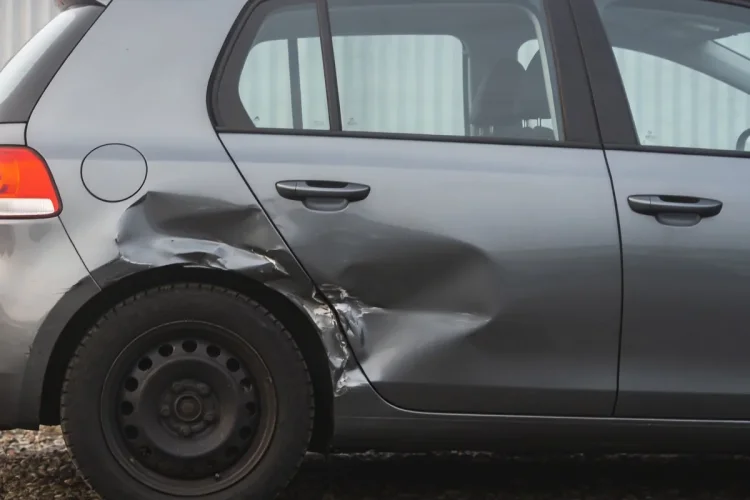
The listing says “repairable write-off”. The car looks sound in the photos and the price is well under similar cars. Everything depends on one label, and a statutory write off and a repairable one permit very different things.
Our position is short. Read the label before the price. A statutory write-off is a parts car: in Western Australia it can never go back on the road. A repairable write-off can be licensed again only after repair records and inspections, and the rules differ by state. The label turns on the department’s damage criteria, not on a share of the car’s value.
One boundary first. We could read the official pages for Western Australia, New South Wales and the national PPSR register, so this guide pins only those. Each state and territory runs its own written-off vehicle rules, and nothing below is a statement about the others. If you live elsewhere, read your own state’s road authority page and register before you pay for anything.
What the Two Labels Mean
The Western Australian Department of Transport and Major Infrastructure (DTMI) defines both. On its Write-off a vehicle page, updated on 26 June 2026, a repairable written-off vehicle (or total loss) is one where the cost of repairs to meet safety and roadworthiness standards, plus the salvage value, exceeds the vehicle’s market or insured value, and which has not sustained damage that automatically makes it statutory. It may be repaired and potentially re-licensed, subject to every inspection and licensing requirement.
A vehicle must be classed as statutory where it has severe damage that makes it unsafe and not suitable for repair, or meets specific statutory damage criteria, such as certain types of fire, water, structural or stripping damage. Statutory write-offs cannot be repaired or re-licensed, regardless of repair cost, and may only be used for parts or scrap metal.
An approved assessor decides: an insurer, a licensed motor vehicle assessor, or a dealer or wrecker. Where the vehicle meets the notifiable criteria, the assessor tells DTMI, the licence is cancelled and the plates must be returned within 28 days. DTMI’s Written-Off Vehicle Register (WOVR) records the identifying details, the damage and whether the vehicle is statutory or repairable.
New South Wales words it differently. Its government page says a light vehicle assessed as a total loss must be written off, and that written-off light vehicles cannot be re-registered in NSW except in limited circumstances. They can still be bought and sold, but only used for parts or scrap metal.
Cost Does Not Make a Car Statutory
Some wrecker and removal-company blogs say a car becomes a write-off, or a statutory one, once repairs reach a stated share of its value. That rule is not the department’s test, and it mixes up two questions.
DTMI separates them. The cost test decides whether a car is a total loss, and a total loss with no statutory damage is repairable. The statutory label comes from damage, whatever the repair would cost. Two of the listed criteria, combined fire damage and stripping, are worded in terms of a total loss, so cost is not entirely absent from the statutory test, but the department’s own line is that statutory vehicles cannot be repaired or re-licensed regardless of repair cost.
Here is our reading of the definition, not a calculation. Take a hypothetical older, low-value hatchback with a crumpled door and a bent bonnet. Repairs plus salvage value can exceed what the car is worth, so it is a total loss, but it has no statutory damage, so it is repairable. Now take a hypothetical late-model car flooded above the inner door sill. It meets a statutory criterion, so it is statutory however little the repair might cost. The cheap, moderately damaged car can be repairable. The expensive one can be statutory.
The Damage That Makes a Car Statutory
DTMI’s Statutory written-off vehicles page (updated 26 June 2026) says a vehicle is assessed against national criteria developed by Austroads and the National Motor Vehicle Theft Reduction Council: 11 types of damage, grouped into 3 specific events and 8 structural criteria. NSW’s re-registering page also refers to Austroads criteria for statutory write-offs, but we could not open the Austroads guide, so the table below is the WA page’s own summary.
| Criterion | What the WA page says |
|---|---|
| Fire | Paint blistering on any 3 structural members (roof, pillars, floor pan, firewall, or chassis and rails), or combined interior and exterior fire damage that is a total loss |
| Water | The internal cabin inundated so that the water level rises above the inner door sill, for any period |
| Stripping | Stripped of interior or exterior parts, panels and components, and determined to be a total loss |
| Structural | Damage to any 3 of the identified structural areas and/or supplementary restraints; each separate area counts separately |
Any one of the three specific events makes a car statutory; for structural damage, the count of three matters. Motorcycles and trailers have their own list.
That lets you test a seller’s story. “It was only flooded to the floor” can be set against the water criterion: did the cabin water rise above the inner door sill, for any period? Ask what the record says.
What a Repairable Car Needs Before It Is Legal Again
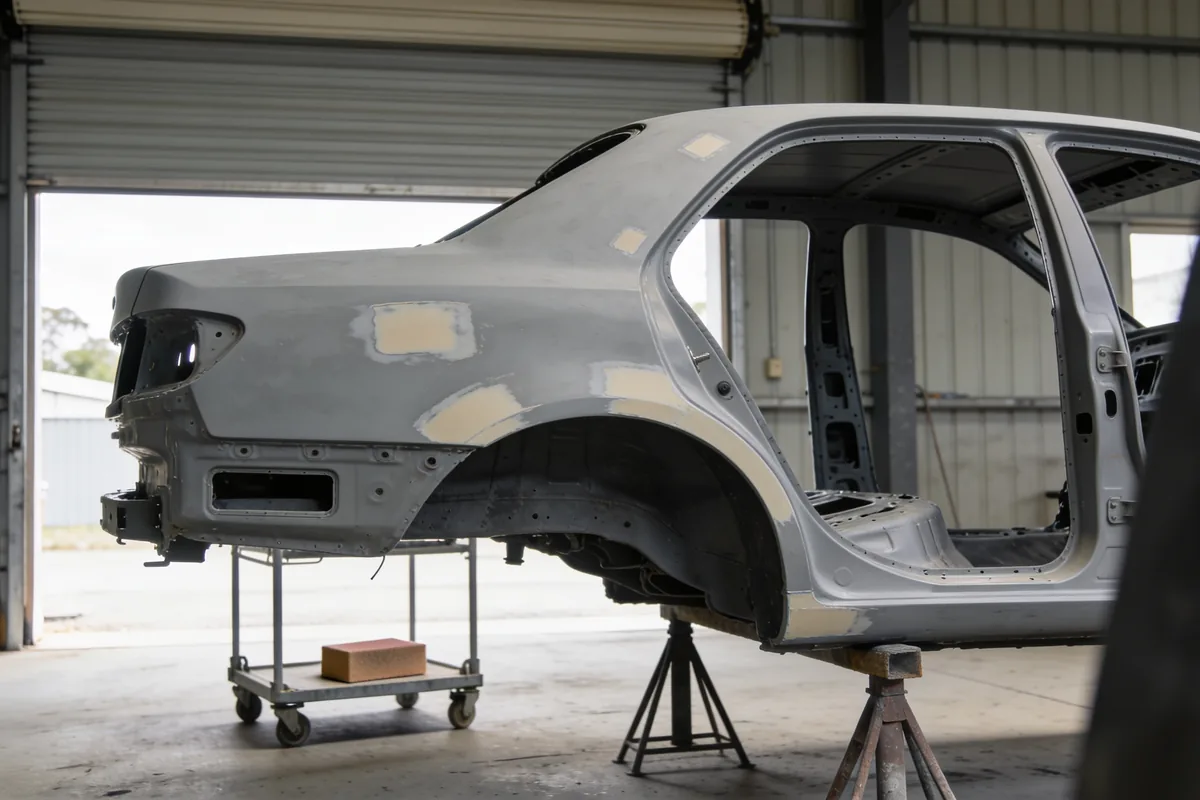
In WA, a repairable car is not licensed because it looks right. DTMI’s License a repairable written-off vehicle page (updated 11 June 2026) sets out the path, and a buyer can read it as a document list.
- Receipts for the major parts used and for the repair itself.
- Photographs taken before, during and after the repair.
- If the airbag system was repaired or replaced, a report from an accredited agent or dealer certifying it is complete and operational.
- A primary inspection by an authorised written-off vehicle inspection business before the final trim, fillers, paint and finishes go on.
- A secondary identity and roadworthy inspection at an Authorised Inspection Station once those finishes are applied.
- An application with both inspection certificates and proof of identity. The vehicle must be primarily kept in WA and fitted with an approved immobiliser.
Inspection fees, DTMI says, are not regulated. The primary inspection is dated before the finishes, which gives you a test: a repaired, painted car with no primary inspection certificate cannot have followed the WA path. An unlicensed car also needs a temporary movement permit to reach an inspection, covered in our guide to the unregistered vehicle permit.
The record stays after repair. DTMI says that once the vehicle is re-licensed its status changes to “inspected”, but the written-off history continues to be recorded against the registration and stays visible on the PPSR.
New South Wales Is Stricter, and an Interstate Car Has a Trap
The NSW page on re-registering (last updated 20 December 2022) says Transport for NSW will consider an application only where the vehicle has not suffered statutory write-off damage and one of three things holds: the applicant is the same registered operator and the damage is hail only, or the applicant was the registered operator for more than 28 days before the damage, or the applicant inherited the vehicle. It says not to begin repairs without authorisation. Afterwards come a Certificate of Compliance, an inspection of identity, design and safety, and a Vehicle Inspectorate check that the vehicle has not been rebirthed.
| Question | Western Australia | New South Wales |
|---|---|---|
| Statutory write-off re-licensed? | No: “can never be re-licensed” | Not as a rule: “cannot be re-registered in NSW, except in limited circumstances” |
| Repairable write-off re-licensed? | Yes, after records, two inspections and an application | Only in the limited circumstances above, with authorisation before any repair |
| What can a buyer do with it? | Statutory: parts or scrap only. Repairable: repair and licence | “can still be bought and sold, but only used for parts or scrap metal” unless a limited circumstance applies |
| Record after repair | History stays and shows on the PPSR | The Certificate of Registration notes the vehicle was written off |
| Written off in another state | Not pinned here | Repaired, inspected and registered in that state first, then a Vehicle Inspectorate inspection |
The last row is the trap. NSW says a car written off in another state must be repaired, inspected and registered there, under that state’s rules, before you can apply for NSW registration. A car that can be licensed in one state is no bargain in NSW just because the price is low. Where it can be registered matters more than what it costs.
Checks Before You Pay
Run these in order.
Search the PPSR on the VIN. The PPSR says a car search may show whether the car is recorded as stolen or written off. You need the VIN or chassis number, not the plate or engine number. The online search costs $2.00, and the PPSR says to run it on the day or the day before you buy.
Know what it cannot guarantee. Written-off and stolen details reach the PPSR through NEVDIS from state road agencies and police, and the PPSR says that data is not always available or up to date. WA lists a car on its register only if it is up to 4,500 kg and was made within the 15 years ending on the date of the damage, and DTMI says not all damaged vehicles need to be listed. A clear search is good news, not proof.
Use the state check too. In NSW you can check a vehicle’s written-off status, in NSW or interstate, by phoning 13 22 13 or visiting a service centre; the page says it is free and needs the plate number. Look at the VIN yourself. In WA a statutory write-off carries a label near the VIN, removing or defacing it is an offence, and the identifier is also defaced as a warning. NSW says re-birthing is illegal and re-birthed vehicles are often poorly repaired and can be a safety risk.
If the label says statutory, the car is a source of parts, and the wreckers and other vehicle ads are where you will meet such cars. The checks above apply to every ad you open.
Private Sale Versus Dealer, and What If Nobody Told You
As we read the WA Consumer Protection release of 28 May 2026, a licensed dealer must disclose a repairable write-off on a form displayed where it is visible through the windscreen, but the rules do not reach private sales, which carry more risk. It adds that insurers can see the VIN on a register, so a buyer may struggle to get full insurance, and market value can be lower.
If the register is clear and the seller said nothing, the checks are yours, before you pay. Keep the advertisement, the messages and the PPSR certificate. A WA dealer who skipped the form is a matter for Consumer Protection; in a private sale, the VIN, the search and the paperwork are your protection.
The Fair Point for Repairable Cars
Repairable cars are not traps. WA Consumer Protection itself says repairable write-offs can be re-registered and sold once they pass a safety inspection. A properly repaired and inspected car can be sound. The lower price reflects the record that follows the car and the paperwork you must hold. The risk sits in a private sale with no documents, not in the label.
Decide Which Car You Are Buying
You are buying one of two things. A statutory write-off is a parts car, and no price changes that. A repairable write-off is a project with a paper trail to match. The label, the register and the documents settle which one is in front of you, and they should settle it before you pay.
Sources: WA Department of Transport and Major Infrastructure, Write-off a vehicle (https://www.transport.wa.gov.au/licensing/vehicle/written-off-vehicles/write-off); WA Department of Transport and Major Infrastructure, Statutory written-off vehicles (https://www.transport.wa.gov.au/licensing/vehicle/written-off-vehicles/statutory-written-off-vehicles); WA Department of Transport and Major Infrastructure, License a repairable written-off vehicle (https://www.transport.wa.gov.au/licensing/vehicle/written-off-vehicles/license-repairable-written-off); WA Consumer Protection, The Commissioner: understanding the risks of buying repairable write-offs, 28 May 2026 (https://consumerprotection.wa.gov.au/announcements/the-commissioner-understanding-the-risks-of-buying-repairable-write-offs); NSW Government, Owning or buying a written-off light vehicle (https://www.nsw.gov.au/driving-boating-and-transport/driving-nsw/vehicle-registration/written-off-vehicles/owning-or-buying-a-written-off-light-vehicle); NSW Government, Re-registering a written-off light vehicle (https://www.nsw.gov.au/driving-boating-and-transport/driving-nsw/vehicle-registration/written-off-vehicles/re-registering-a-written-off-light-vehicle); NSW Government, Register a light vehicle written off in another state (https://www.nsw.gov.au/driving-boating-and-transport/driving-nsw/vehicle-registration/written-off-vehicles/how-to-register-a-light-vehicle-nsw-thats-been-written-off-another-state); PPSR, Do a used car or vehicle search (https://www.ppsr.gov.au/carcheck)


