 Places
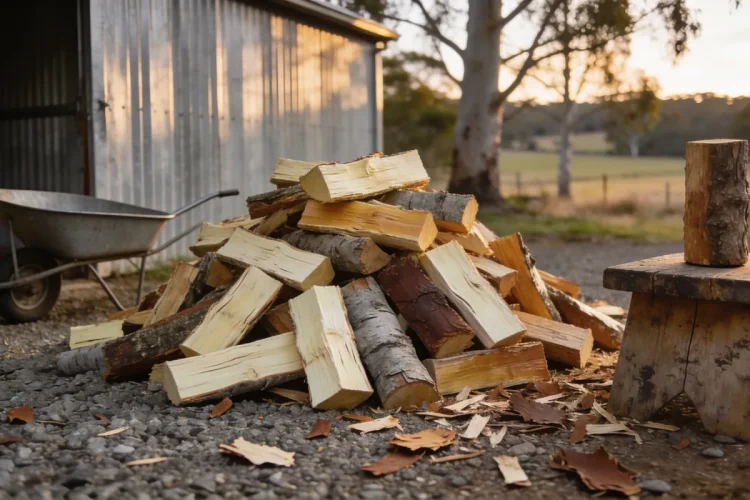
A ute load of firewood is a perfectly good way to buy. A ute load that comes with a number attached is a red flag. If an ad says “ute load” and then “about a cubic metre” or “roughly a tonne”, the seller has told you something the lot method does not let them say.
That is the whole rule, and most buyers have never heard it. The National Measurement Institute’s guidance for sellers says firewood can be sold by weight, by volume or by lot, and a lot is a load such as a stack, a trailer or a truck. Sell by the lot and, in the guidance’s words, you “can’t refer to the weight or volume of the lot”. The load is the unit. Its size is not on offer.
Our view: take the ute load if you want a simple, quick deal, because it is lawful. But the cubic metres in a ute-load ad are never the seller’s to tell you. Measure the tray yourself, work out the volume with a tape and a pencil, compare sellers in one unit only, and walk away from any ad that names a cubic metre or a tonne for a ute load without saying how it was measured. The rest of this post gives you the sum.
What a Firewood Ad Is Allowed to Say
There are three lawful ways to sell firewood, and each one limits what the ad can claim.
By weight. The seller advertises tonnes or kilograms, and only the net weight of the wood counts. The trailer, containers and ropes are not part of it. If one delivery serves several customers, each load is kept separate and each customer gets a delivery docket stating the weight.
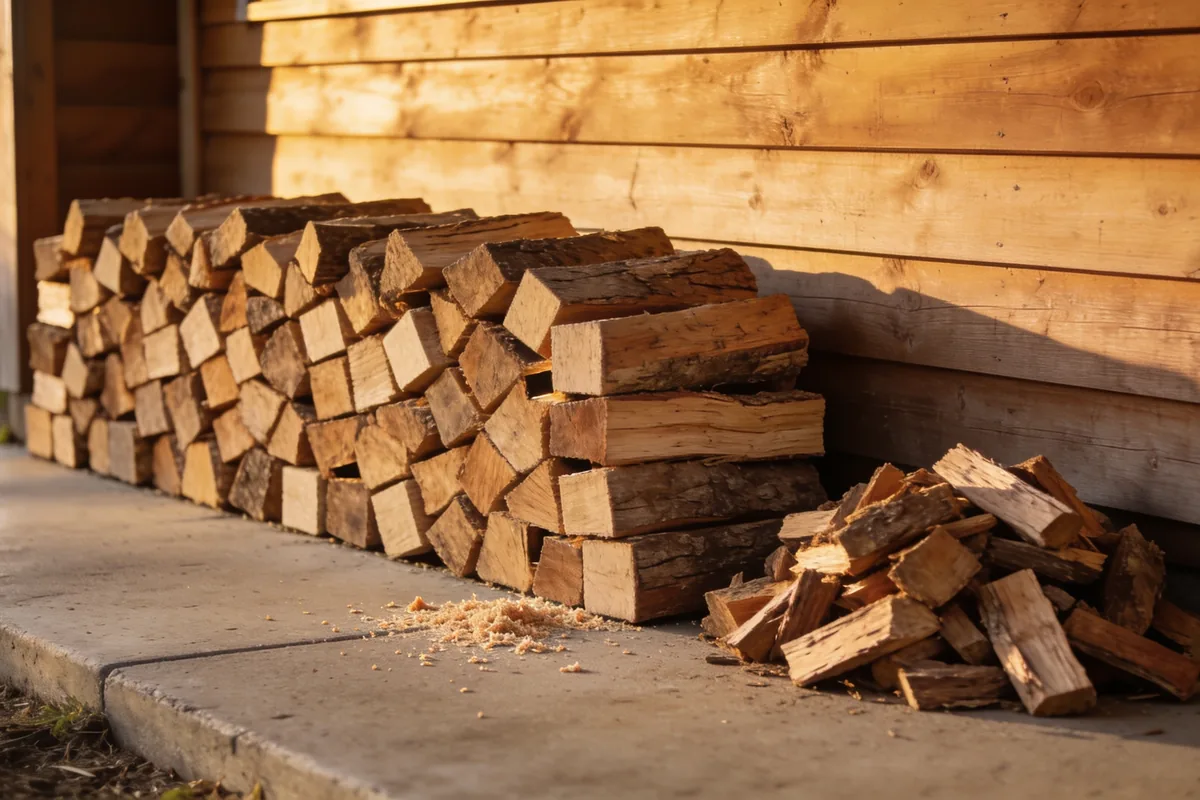
By volume. The seller advertises cubic metres. When they measure, the guidance says to “neatly stack it with as few gaps as possible”. The sum is width times height times length, in metres, read off a rule or a flexible tape. A cubic metre of loose, tipped wood is not a cubic metre of stacked wood, because loose wood leaves more gaps between the pieces.
By lot. The seller advertises a load, such as a ute load, a trailer load or a stack. Here the ad cannot refer to the weight or volume of the lot. A seller who wants to quote a size has to sell by weight or volume and meet those rules instead.
One more rule helps you. If you are not there when the wood is measured, or you have no clear view of it, the seller must give you an accurate invoice or note on delivery. And bagged firewood or kindling carries its net weight on the outside of the package, along with the packer’s name and street address (not a PO box, email or phone number) unless it is sold where it was packed.
| How it is sold | What the ad may say | What you should ask |
|---|---|---|
| By weight | Tonnes or kilograms of net wood | Is that net weight, and will I get a docket? |
| By volume | Cubic metres, measured as a neat stack with few gaps | Who measured it, and was it stacked? |
| By lot | The load only (a ute load, a trailer load). No weight or volume | What is the tray size, and how high will it be stacked? |
None of this makes a ute load unlawful. It makes a ute load a lot, and a lot is a thing you have to size up yourself.
Do the Sum on the Tray
You do not need the seller’s cubic metre. You need three numbers from the tray: length, width and the height the wood will sit at when it is stacked neatly. Multiply them, in metres, and you have a volume you can compare against any price.
Here is a worked example, and every number in it is invented. Take an imaginary tray with an inside length of 1.8 m and a width of 1.5 m. That gives a floor area of 2.7 square metres. Now two imaginary sellers: Seller A offers a “ute load” for $150, and Seller B offers a measured cubic metre of neatly stacked wood for $170. These are made-up prices, not market prices.
How much wood Seller A actually delivers depends on how high it sits on the tray.
| Stacked height on the tray | Volume (1.8 x 1.5 x height) | Seller A’s price per cubic metre |
|---|---|---|
| 0.3 m (30 cm) | 0.81 cubic metres | about $185 |
| 0.4 m (40 cm) | 1.08 cubic metres | about $139 |
| 0.327 m (about 33 cm) | about 0.88 cubic metres | about $170, level with Seller B |
The bottom row is the one to remember. It is the break-even point. Divide Seller A’s $150 by Seller B’s $170 and you get about 0.88 cubic metres. On this tray that is a stacked height of about 33 cm (0.88 divided by 2.7). If the load holds at least that much, the ute load is the cheaper buy. If it holds less, the measured cubic metre wins, even though its sticker looks higher.
Two things can wreck the sum, and both are about height.
First, a heap is not a stack. Tip firewood loose into a tray and it piles up in the middle, with big gaps between the pieces. The top of the heap looks generous. The same wood laid neatly would sit much lower. The regulator warns that the free space varies from stack to stack, so we will not give you a percentage. Measure the height of the wood as it would sit if it were laid tight, not the peak of the pile.
Second, a guessed tray size is a guessed volume. Measure the inside floor of the tray yourself, because the sum multiplies any error in length and width. Ask the seller for the tray size, and if you can, ask to see the wood laid out before you pay.
Why a Tonne and a Cubic Metre Will Not Convert
You will see sellers print a fixed conversion, something like “a tonne is about so many cubic metres”. It is tempting to use it, and the national guidance tells you not to. It says not to make assumptions or claims about the weight of a measured volume of wood, or the volume of a measured weight of wood. The reason is that wood density varies, moisture content varies, and the amount of free space in a stack varies.
A national firewood industry body says the same thing in plain words: it is not possible to compare cubic metres with tonnes, because of the differences in wood density, moisture content and how well the wood has been stacked for measurement. It also says both units are legal, that a cubic metre cannot be measured as accurately as a tonne, and that buying by weight is “probably safest”.
Some supplier pages go the other way. They describe a cubic metre as a good size for a ute load, or print a single tonne-to-cubic-metre ratio. That is convenient, but it is exactly the kind of size claim the lot method does not allow, and it says nothing about how the stack was measured. We side with the regulator and the industry body on this one.
Compare within one unit only. Price two cubic metre offers against each other, or two tonne offers against each other, or turn a ute load into cubic metres with your own tray sum. If the seller sells by the tonne, ask for the weighbridge or scale docket. And if you have to ask who measured the wood, you have just learned something about the ad.
Fair point to the other side: weight is the safest unit, but a tonne is more wood than many buyers want. If you have a small heater and a small shed, a ute load is quick and suits you fine. Just do your own sum first.
Questions to Ask Before You Pay
Put these to the seller before you hand over money. A seller who has measured the load will answer them easily.
- How is it sold: by the lot, by volume or by weight?
- If it is volume, was it measured stacked, and what are the stack dimensions or the tray size?
- If it is weight, will you give me a docket for the net weight of the wood?
- How long has it been drying, and how do you know it is dry?
- What is the species, and is it a single timber or a mix?
- Is there any treated, painted or stained timber in the load?
- Who unloads and measures at delivery, and will I get an invoice or note if I am not there to see it?
If a seller will not answer the first two, you are being asked to pay for a size nobody has measured. That is the point to walk away.
Dry Wood Is the Part You Cannot See
You can measure a load. You cannot see how wet it is. That makes dryness the other half of what you are paying for.
EPA Victoria’s advice on wood heaters says to always use dry, seasoned and untreated hardwood. Seasoned means dried over time, or kiln dried, and untreated means no chemicals such as paints or stains. It makes more heat and less smoke, and it does not clog the heater’s flue. The EPA’s own line on buying it is short: when you buy dry, seasoned and untreated hardwood, use it straight away. If you are drying your own unseasoned hardwood instead, it says to store it for at least eight months in a shed or covered area with good airflow, stacked in a criss-cross pattern.
The same industry body gives a moisture guide, which we are passing on as industry guidance and not as law. It says dry wood is below 25 per cent moisture and preferably between 12 and 20 per cent, and the best test is an electrical resistance moisture meter. Without a meter, dry wood feels comparatively heavy for its size, and a split piece that is much darker in the middle than on the outside is wetter. As a rough rule of thumb, it puts cross-cut 300 mm rounds at about six to twelve months to fall below 25 per cent. That is a ballpark, so treat it that way.
Two more points from EPA Victoria to keep in your head:
- Use the fuel type listed on your heater’s compliance plate, and check the manufacturer’s guide to safe fuels.
- Do not burn coal, coke, driftwood, household rubbish, painted wood, treated timber, or green-coloured pine logs like those used at parks and playgrounds.
That second list is why question six above matters. A mixed load is where odd pieces turn up.
Where to Draw the Line
A ute load is a lawful way to sell firewood, and it is a lot, so the seller cannot put a weight or a volume on it. Do your own sum from the tray, with the wood laid neatly and not heaped. Compare in one unit only, because tonnes and cubic metres do not convert. And choose a seller who can say how the wood was measured and how long it has been dry. If they cannot, or if the ad names a cubic metre or a tonne for a ute load without saying how it was measured, walk away and find one who can.
Sources: National Measurement Institute, Selling firewood (https://www.industry.gov.au/regulations-and-standards/selling-firewood); EPA Victoria, Manage smoke from wood heaters (https://www.epa.vic.gov.au/manage-smoke-wood-heaters); National firewood industry body, Firewood Facts (https://www.firewood.asn.au/firewood-facts/)


