 Places
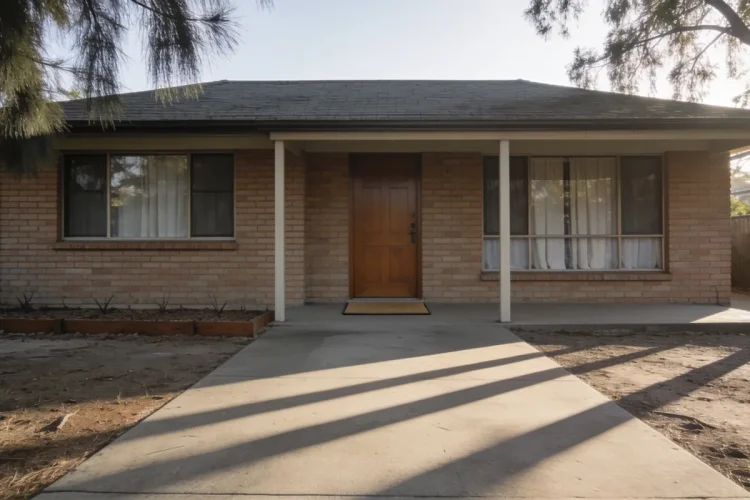
You have been refreshing the same search for weeks. Then a listing appears: the right suburb, the right number of bedrooms, and a rent that feels like someone has finally cut you a break. Wanting it is completely normal. Rental scams count on that feeling, and falling for one says nothing bad about you.
Here is our position, plainly. Do not send a bond, rent or a “holding” payment to anyone until you have been inside the place, seen the proposed agreement and know who the agent is. Scamwatch, the Western Australian and Queensland governments and the Tenants’ Union of NSW all describe the same pattern: a fake listing asks for money first. Our reading of their pages is that a real tenancy asks for things in a set order, and the table below sets that order out. The one early payment that is lawful in some states, a holding fee after the landlord has approved your application, is the exception that proves the order.
Scamwatch says scammers pose as landlords for properties that may not exist, or that exist but are not theirs. Its advice: never pay for a rental you cannot inspect, deal with an agent licensed in your state, and search online to confirm the property exists and is a rental.
How a Fake Rental Listing Works
A fake ad often looks ordinary because it borrows from a real one. The Queensland Residential Tenancies Authority says fake advertisements are usually posted by someone pretending to be a property manager or owner, and that scammers often use photos and details from a genuine rental or real estate advert. The home may not exist, or it may be real and simply not available.
Then comes the reason you cannot go in. The Western Australian Government’s release, first published on 22 November 2023, describes a common version. You are given an address to drive past, there are excuses for why you cannot go inside, and then you are asked for a bond or rent upfront, when the property might already be rented, up for sale or not exist at all. Scamwatch lists the same excuses followed by a request for a bond or rent in advance, and adds that you may also be asked for identity information such as your licence or passport.
The Tenants’ Union of NSW, in a page updated in June 2025, says that if someone says “I’m overseas” or “I can’t show you the place, just pay a deposit first”, that is a huge red flag. It adds that scammers avoid paperwork because paperwork can get them caught.
Pressure is the other ingredient. Queensland’s authority says to be cautious if the advertiser pushes you to sign and pay as quickly as possible. It also warns that some scams pair real pictures with a draft agreement carrying a fake house number, so compare the number on the agreement with the address in the ad.
In the 12 months to November 2023, that WA release says, WA ScamNet received 129 complaints about real estate and rental scams, and 74 West Australians were almost one million dollars out of pocket in total. One state, one year: a reason to slow down, not to panic.
The Order Money Is Asked For
Price is a feeling. Order is something you can check. The table below sets out what a real tenancy asks for at each step, drawn from the official pages named in the sources, and what a scam asks for instead.
| Step | A real tenancy | The scam pattern |
|---|---|---|
| Seeing it | Inspect in person, or by video walkthrough with the manager (Queensland); you or someone you trust, in real life (Tenants’ Union of NSW); a landlord or licensed manager you can meet in person (WA) | Excuses for not going inside, a drive-by address only, “I’m overseas” |
| Applying | An application and screening process; no application fee in Queensland; in NSW only a holding fee, bond, rent or lease registration fee may be charged | A fee to apply, or pressure to pay at once |
| Approval | NSW holding fee of no more than one week’s rent, only after the landlord or agent has approved your application | A “deposit” before any approval |
| The agreement | A copy of the proposed agreement before you pay any money (Queensland); the house number and details match the ad | No paperwork, or a draft with a different house number |
| The bond | Lodged with the state authority, with a receipt or acknowledgement from it; capped at 4 weeks in NSW and Queensland | Sent to a personal account or to a stranger |
| Rent in advance | Capped in Queensland: 1 month for a fixed term, 2 weeks for a periodic tenancy | “Upfront” rent for a place you have not seen |
| The keys | WA’s advice: the signed lease and the keys in exchange for any money you agree to pay | Money first, keys “later” |
Three things follow from the table.
First, order beats price as a test. A genuine tenancy produces a document at every step. A scam has to skip them, which is why the request for money so often arrives first.
Second, there is one lawful early payment, and it is narrow. The NSW Government says you may be asked for a holding fee of no more than one week’s rent, and that a landlord or agent can only require or receive one if they have approved your application. So a “deposit” requested before anyone has approved you is not a holding fee. Ask whether you have been approved, and ask for a receipt.
Third, be careful with a neat slogan. WA advises requiring a copy of the signed lease and the keys in exchange for any money you agree to pay, a good rule of thumb. But in NSW the bond is paid to NSW Fair Trading through a state service, which sends you a receipt, and your agent or landlord then arranges for you to sign the agreement. So “pay nothing until the lease is signed” is not true everywhere. The better test is two questions: who am I paying, and who sends the receipt?
Where a Real Bond Ends Up
A bond is not a gift to the person advertising. In the three states we could read, it is held by a state authority, and that gives you a clean test.
| NSW | Victoria | Queensland | |
|---|---|---|---|
| Who holds the bond | NSW Fair Trading, through Rental Bonds Online | The Residential Tenancies Bond Authority (RTBA), which holds all bonds paid in Victorian residential agreements | The Residential Tenancies Authority (RTA) |
| What you should receive | A receipt from NSW Fair Trading once it has the money; the agent or landlord is notified | The page we read does not say; ask for proof of lodgement from the RTBA itself (our advice) | A receipt if you pay the manager, then a bond acknowledgement from the RTA |
| Maximum bond | 4 weeks rent | Not covered here | 4 weeks rent for general tenancies |
| Who can lodge it | The agent or landlord, who must be registered and offer the service first; you can also lodge it yourself | Rental providers must be registered to transact with the RTBA | The manager, within 10 days, or you, using RTA Web Services |
The Tenants’ Union suggests that, if possible, you lodge your bond yourself rather than through the agent or landlord. Queensland says it is an offence for a manager not to lodge a bond with the RTA within 10 days.
Because a real bond ends up with an authority, a request to send it to a personal account is a signal in itself. Scamwatch also lists money orders, pre-loaded cards, several different PayIDs and an account holder who does not match the person you think you are paying. Ask for the receipt or acknowledgement from the authority, not from the person who took your money.
Queensland’s rent-in-advance cap is a second test. Its authority says a manager cannot solicit, accept or invite more rent in advance than the rules allow, even if the applicant offers more. A request for several months upfront is a warning in itself.
One honest limit: every state and territory runs its own bond authority and rules. If you rent somewhere other than NSW, Victoria or Queensland, check your state’s page before you pay anything.
When You Cannot Get There in Person
This is the part a simple checklist skips, so let us be fair about it. A renter in a tight market is pushed to move fast, and an interstate or overseas renter genuinely cannot always attend. The sources do not quite agree on what to do.
Scamwatch says never pay for a rental you cannot inspect. WA says inspect before signing or paying. The Tenants’ Union says you or someone you trust must have seen the place in real life before you hand over money. Queensland is the most flexible: inspect in person or by video walkthrough with the manager or owner, and if you are interstate or overseas, a friend or family member can inspect for you.
Our ruling is the middle path. Someone you trust should be in the room, or you should do a live video walkthrough with a manager whose identity you have checked through the agency’s own contact details, not the ones in the ad. Photos, a recorded video, a drive-by and a promise that you can see it after you pay are not an inspection. If no one can see it, do not send money.
If your move date is the pressure, a short stay near the area buys time, and browsing removalists can wait until the place is real. That is our suggestion, not a source’s rule.
Ten Minutes of Checks Before You Reply
Before you answer an ad, give it ten calm minutes. None of these is a guarantee, and together they catch a lot.
- Search the address online, and look at it on a map and on street view, as Queensland suggests.
- Run a reverse image search on the photos, since scammers often reuse photos from a genuine advert.
- Find the agency’s own phone number yourself and ring it, rather than using the number in the ad.
- Look at the email address. Queensland says someone advertising for an agency should use an email connected to the agency, not a personal one.
- Check the licence, as Scamwatch advises.
- Note any application fee. Queensland says a property owner or manager cannot charge one.
- Check that the account name matches the agency before you transfer anything.
The same checks apply to any ad, including notices on community listings, where people post rooms and spare places. A friendly tone is not proof of anything. The order of payments is.
If You Have Already Paid
If you have sent money, take a breath. This happens to careful people, and the next hour matters most.
Contact your bank or card provider straight away and ask them to stop any transactions. Scamwatch warns that many payments are made instantly and it is unlikely you will get your money back, which is why the first call matters. Change the passwords on your banking, email, government and shopping accounts. Queensland’s page says to report through ReportCyber, and to complain to the Office of Fair Trading if an agent or agency was involved. In WA you can report to ScamNet on 1300 30 40 54.
Be wary of anyone who then offers to get your money back. The WA release warns of follow-up scams, where scammers pretend to be online investigators who will retrieve your stolen money for a fee.
Nothing Moves Until You Have Been Inside
Before any money leaves your account, ask yourself three questions. Have I been inside, or has someone I trust? Have I seen the proposed agreement, with the right address on it? And who exactly is this money going to, and who will send me the receipt?
If you cannot answer all three, the calm step is to pause. A real landlord or agent can wait a day for you to check, and a place that vanishes the moment you slow down was not on offer in the first place.
Sources: Scamwatch, Buying and selling scams (https://www.scamwatch.gov.au/types-of-scams/buying-or-selling); WA Government, Shut the door on real estate and rental scammers, 22 Nov 2023 (https://www.wa.gov.au/government/announcements/shut-the-door-real-estate-and-rental-scammers); Tenants’ Union of NSW, Tips: Avoiding rental scams, updated June 2025 (https://www.tenants.org.au/resource/avoiding-scams); Queensland RTA, Rental scams (https://www.rta.qld.gov.au/before-renting/choosing-a-rental-property/rental-scams); Queensland RTA, Rental bond (https://www.rta.qld.gov.au/starting-a-tenancy/rental-bond); Queensland RTA, Rent payments (https://www.rta.qld.gov.au/starting-a-tenancy/rent-payments); NSW Government, Rental Bonds Online for tenants (https://www.nsw.gov.au/housing-and-construction/renting-a-place-to-live/residential-rental-bonds/rental-bonds-online-for-tenants); NSW Government, Finding and applying for a rental property (https://www.nsw.gov.au/housing-and-construction/renting-a-place-to-live/starting-a-residential-tenancy/finding-and-applying-for-a-rental-property); Consumer Affairs Victoria, Bond (https://www.consumer.vic.gov.au/housing/renting/rent-bond-bills-and-condition-reports/bond)


