 Places
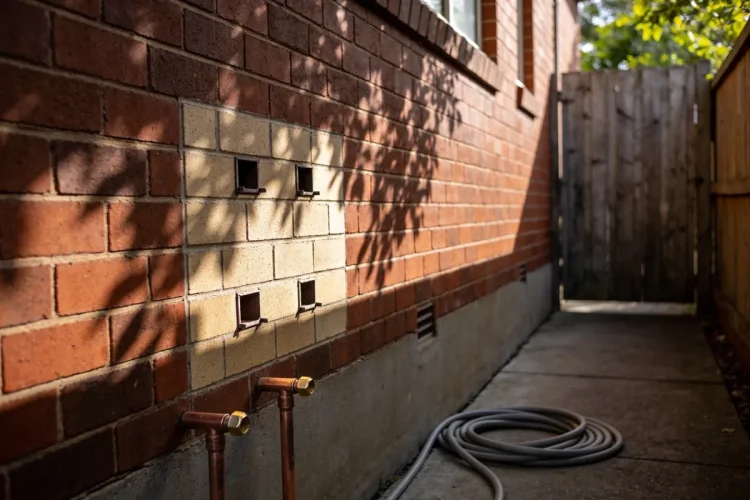
Say the ad reads like this: reverse-cycle split system, 2.5kW, works perfectly, coming out because of a renovation, $300. Summer is a few weeks away, a new unit in the shops costs more than twice that, and the decision looks easy. It isn’t, because the $300 is the smallest number in the sum. A split system has to be taken off one wall and put on another, and in Australia both of those jobs are licensed work with published prices.
So here is our position, stated plainly. A used split system rarely beats a new one installed. On published Australian prices, once a licensed decommission, a standard install and a possible regas are counted, the saving on a typical $300 listing runs from about $317 at best to a loss of about $183 at worst, and the used unit comes with no manufacturer warranty. The second-hand cooler that can be a genuine bargain is a different machine: the plug-in portable, for a renter or a room you only cool now and then.
The rest of this guide shows the working, so you can run the same sum on any ad you find.
Why a Split System Is Not a Toaster
Most second-hand buys are judged on the item in front of you. When you are buying second-hand furniture, a torch, a tape measure and five minutes tell you most of what you need. A split system is judged mostly on work that happens after the money changes hands.
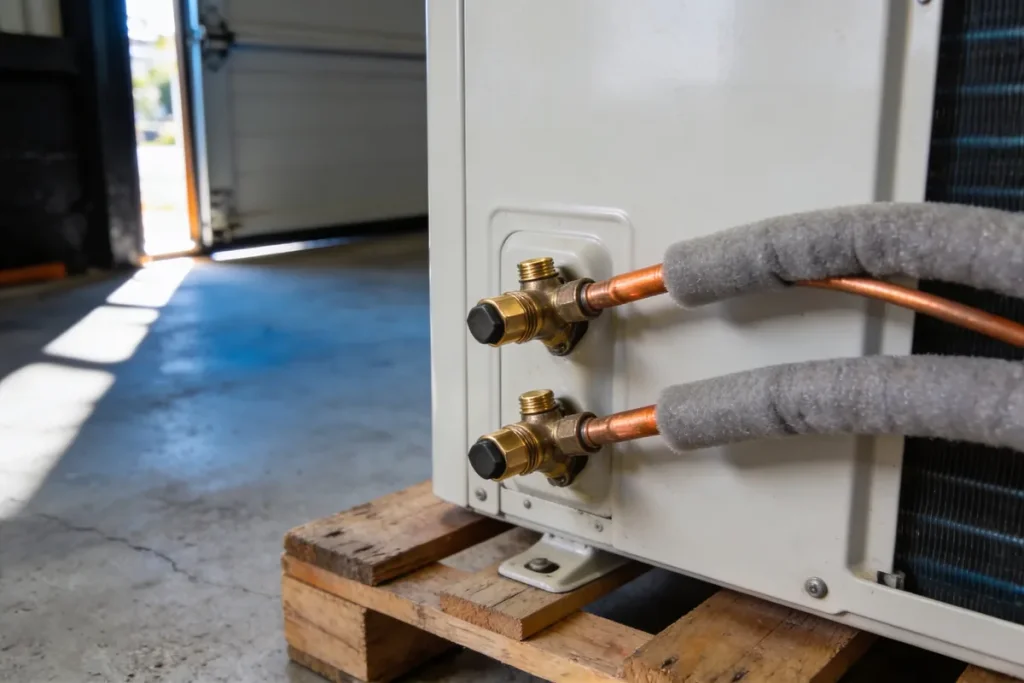
The reason is how the thing is built. A split has two halves: the indoor head on the wall and the outdoor unit with the compressor. They are joined by refrigerant lines, and the refrigerant circulates in a sealed loop between them. Taking the system down means dealing with that refrigerant before the lines are disconnected, and putting it back up means connecting, sealing and charging the loop again at the new address.
The Australian Refrigeration Council (ARC) administers the licensing for that work. Its licence types page sets out two that cover a split system. RAC01 is the full refrigeration and air conditioning licence. RSS03 is a restricted licence for the installation and decommissioning of a single-head split system air conditioner under 18kW. Either way the rule is the same: installing or decommissioning a split requires an ARC refrigerant handling licence. That applies at both ends of a second-hand sale, the removal from the seller’s wall and the install on yours.
There is a second trade involved as well. The electrical connection needs an appropriately licensed electrician, so a split moving house is never a weekend job with a drill and a spare afternoon.
Compare that with a toaster or a portable air conditioner, which you take home and plug in. The price on the ad is close to the whole cost. With a split, the price on the ad is the opening line.
The Sum, Line by Line
This is a worked example, and it is hypothetical. The ad is the one above: a 2.5kW-class reverse-cycle split, R32 refrigerant, asking $300, which sits comfortably inside the asking prices seen for used units on the main classified platforms (one state listing “starting from $40”, and listings in one capital city running from $50 to $800). The new comparison is a 2.6kW reverse-cycle split at $717, the lowest of 16 retailer offers on a price comparison site in October 2026. We have used the same installer price on both sides, so the comparison is fair.
| Cost line | Used split, asking $300 | New 2.6kW split |
|---|---|---|
| Purchase price | $300 | $717 |
| Licensed decommission and removal from the seller’s wall | $100 to $300 | Not needed |
| Standard install (3 to 4 metre pipe run) | $600 to $1,200 | $600 to $1,200 |
| Regas, split up to 5kW | $0 to $300 | Not counted |
| Total | $1,000 to $2,100 | $1,317 to $1,917 |
| Manufacturer warranty | None | Full |
The figures come from published Australian guides. Oz Air Online puts removal and disposal of an existing system at $100 to $300, which we have used as the decommission cost, and labour for a straightforward split install at $600 to $1,200, on the assumption of a standard 3 to 4 metre pipe run. Its regas guide puts a regas on a split up to 5kW at $200 to $300. SolarQuotes, in its 2026 pricing, gives a single split supplied and installed at $1,800 to $4,800, with $1,000 to $1,200 of that being the install, which sits inside the labour range above.
Because the install is the same on both sides, it cancels out. What you are really comparing is $717 for the new unit against $300 plus the decommission plus any regas, which comes to $400 to $900 for the used one. That leaves:
- Best case: the used unit saves about $317. That needs the cheapest decommission and no regas.
- Worst case: the used unit costs about $183 more than new. That is the dearest decommission plus a full regas.
Both of those are before any repair, and before any new pipe. SolarQuotes and CHOICE both note that when a unit goes in, the manufacturer’s warranty typically requires new piping rather than reused lines, so ask your installer whether they would reuse the old lines or run new ones. New pipe is not in our figures, and every extra like it pushes the used side further down.
The break-even rule
You can turn the sum around to find the most a used split is worth. Take the new price, subtract the decommission and the regas, and what is left is the ceiling on the asking price:
- With a cheap decommission ($100) and no regas: $717 minus $100 is $617.
- With a dear decommission ($300) and a full regas ($300): $717 minus $600 is $117.
So on these prices, a used split has to be listed below somewhere between about $117 and $617 just to break even, and even then you have traded a full manufacturer warranty for a modest saving. The rule we take from it: a used split is worth it only when it is close to free and the decommission has already been done properly.
One more note on the new side. That $717 was the lowest of 16 offers for the same model, and the offers ran as high as $1,829. Paying more for the identical unit is the one way the used option starts to look good on paper, which is a case for shopping around rather than for buying second-hand.
What the Seller’s Ad Does Not Tell You
If you are still interested after the sum, the ad itself will rarely answer the questions that decide the price. These are the ones to ask, and why each matters.
| Question | Why it matters |
|---|---|
| Who took it down, or who will? Ask for the technician’s ARC licence number | Decommissioning is licensed work. If nobody can name a licensed technician, you cannot know what state the refrigerant is in, so price in the regas |
| Were the lines and valves capped? | The system is a sealed loop. Capped valves and lines are what a careful removal looks like |
| What refrigerant is on the rating plate? | If it says R22, walk past. R22 is being phased out: Australia’s import limit for HCFCs, the group R22 belongs to, fell to 2.5 ODP tonnes a year from 2016, and a regas on R22 costs two to three times an R32 regas |
| Are the indoor unit, the outdoor unit and the remote all there? | A split missing one half is not a split, and a missing remote is a small but real cost |
| Why is it coming out? | “Renovation” and “upgraded to ducted” are different stories from “it stopped cooling” |
| Can you see it running before it comes off the wall? | It is the only chance you get to confirm it heats and cools, while it is still connected |
The last question deserves the most weight. Once a split is off the wall you cannot test it until it has been installed again, and by then you have paid for the decommission and the install. Seeing it run in place is the same habit you would use to test second-hand power tools at the seller's door: the checking happens before you hand over money, never after. Run it in cooling mode, run it in heating mode, and listen to the outdoor unit as well as feeling the air from the head.
If the unit has already been removed, the questions about who removed it and whether the lines were capped become the whole case. A clear answer with a licence number is worth a great deal. A vague one should be priced as though a regas is coming.
When a Used Split Can Make Sense
There is a fair point on the other side, and it holds up on the numbers. A common view among people who have priced this up is that a used split is not worth it, mostly because the install costs about as much as the unit and nobody knows its history. We agree. A smaller group make a narrower case: a used unit can be worth it when it is free or nearly free, going into a shed, studio or granny flat where a warranty matters less, or when a licensed technician is prepared to stand behind both the unit and the work.
The break-even rule backs them up. If the asking price is close to zero, the used side of the sum is just the decommission, the install and any regas, and that can come in under the new price. So a used split can make sense when all of these line up:
- It is close to free.
- It runs on R32, not R22.
- It was decommissioned properly by a licensed technician, with the lines capped, or you can arrange that yourself.
- Your installer has agreed to fit a used unit, and you know what they will charge, including any new pipe.
- You accept that there is no manufacturer warranty, and you are comfortable with that for the room it is going into.
Miss one of those and the sum usually tips back to new. Point 4 is the one people tend to skip. Ask the installer before you agree to buy, not after the unit is sitting in your garage.
The Middle Road: Buy New Yourself, Pay a Licensed Installer
There is a third option that sits between supply-and-install and second-hand. Buy a new unit yourself when it is on sale, then pay a licensed installer separately to fit it.
The reasoning is in the price spread. For the 2.6kW unit in our sum, retail offers ran from $717 to $1,829 across 16 sellers. Install labour for a straightforward job runs $600 to $1,200 on the published figures. At the bottom of both ranges, $717 plus $600 comes to $1,317, which is under the $1,800 floor of SolarQuotes’ supply-and-install range for a single split (that range covers bigger units too, so treat it as a rough marker). And you start with a full manufacturer warranty rather than none.
Opinion splits on this point. Some prefer supply-and-install because one business is responsible for both the unit and the work. Others prefer to buy separately and hire their own installer, provided the installer is licensed. Both are reasonable. If you buy separately, read the warranty terms before you book, since they set out what the manufacturer expects of the install, and keep the installer’s invoice with the licence details on it.
Whichever way you go, register the unit with the manufacturer and record both serial numbers, the indoor head and the outdoor unit. They are separate plates on separate boxes, and having both on file makes any warranty conversation shorter.
Why a Used Portable Is Different
Everything above applies to split systems. A plug-in portable air conditioner is another category, and this is where second-hand can be a real bargain.
A portable is self-contained. The refrigerant circuit is sealed inside the one cabinet, nothing is disconnected when it moves, and so there is no decommission, no install and no licence involved. You carry it to the car, carry it inside and plug it in. That makes the asking price close to the whole cost, which is exactly what the split system lacks.
It also suits the people least able to put a split on the wall. If you are renting a room in a share house, a portable needs nothing fixed to the building and goes with you when you move out. The same goes for a spare room, a home office used a few days a week, or a hot bedroom on the worst nights of summer.
The trade-off is running cost. CHOICE’s running-cost guide says a portable can cost twice as much to run as a split of the same size, and its averages over a summer of use put a portable at $173 against $82 for a small split. For a room cooled now and then, that gap is small. For a main living area cooled every afternoon from December to March, it adds up, and a split starts to earn its install. So the portable is the right second-hand buy for occasional cooling, and the wrong one for everyday cooling of a large room.
Before you pay for a used portable, check four things at the seller’s place:
- The exhaust hose. It should be complete, with no splits or crushed sections, and the end fittings should be present.
- The window kit. The panel that fits the window around the hose is easy to lose in a move, so ask to see it.
- The drain plug. Check it is there and seated, so any water the unit collects stays inside it.
- Cold air. Run it in cooling mode for several minutes and feel the outlet. It should blow clearly cold, not just move air around.
What It Comes Down To
A second-hand split system is priced by its ad but paid for by its reinstall. On published Australian prices, a $300 used split saves you at most about $317 against a new unit at $717 and can cost you about $183 more, before any repair or new pipe, and it gives up a full manufacturer warranty to do it. The used split earns its place only when it is close to free, runs on R32, has been decommissioned properly by a licensed technician, and your installer has agreed to fit it. For most buyers the better money is a new unit bought on sale with a licensed install, and the genuine second-hand bargain is the plug-in portable, for a renter or a room you only cool on the hottest days.
Sources: Australian Refrigeration Council, What type of licence do I need? (https://www.arctick.org/licensing/licence-types/); Australian Refrigeration Council, Cool Change issue 40, R22 on the way out (https://coolchange.arctick.org/issue-40/article1.html); Oz Air Online, How Much Does Air Conditioning Cost to Install? (https://www.ozaironline.com.au/blogs/guides/aircon-installation-costs-australia-price-guide); Oz Air Online, Aircon Regassed: What It Is, When You Need It, and What It Costs in Australia (https://www.ozaironline.com.au/blogs/guides/aircon-regassed-cost-signs-australia); SolarQuotes, Aircon Installs: What It Really Costs To Beat The Heat (https://www.solarquotes.com.au/blog/what-aircon-installs-cost-in-2026/); CHOICE, How much does an air conditioner cost to install or replace? (https://www.choice.com.au/home-and-living/cooling/air-conditioners/articles/air-conditioner-installation-and-replacement-costs); CHOICE, Air conditioner energy usage and running costs (https://www.choice.com.au/home-and-living/cooling/air-conditioners/articles/air-conditioner-energy-usage-and-running-costs); BuyWisely, Rinnai 2.6kW Split System Air Conditioner HSNRT25B price comparison (https://buywisely.com.au/au/product/rinnai-2-6kw-split-system-air-conditioner-hsnrt25b)


